
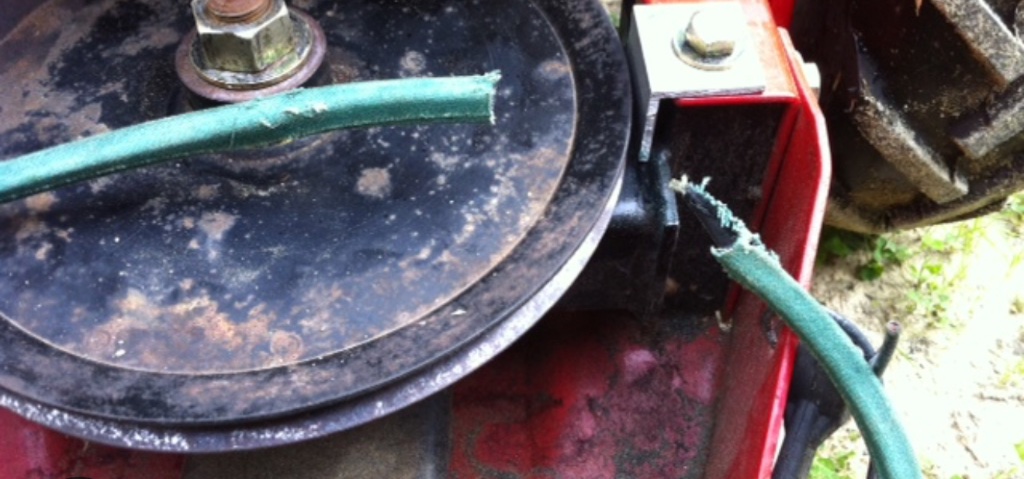
Why Do Mower Belts Break?
A snapped or smoking belt is a common frustration. Understand the causes to prevent future failures.
A PTO or blade belt is a critical component, but it's also a consumable part designed to wear out over time. However, many belt failures are premature and can be avoided. Understanding why they fail is the first step to extending their lifespan and saving on costly repairs.
Think of a belt as a deliberate safety measure. It's designed to be the weakest link in the system. When you hit a solid object or put the deck under extreme load, the belt is engineered to break. This sacrificial failure protects your engine's crankshaft, the expensive PTO clutch, and deck spindles from catastrophic damage. A broken belt might be an inconvenience, but it's far cheaper to fix than a bent crankshaft.
Below, we break down the most common reasons our technicians see for premature belt failure.
The Top 6 Causes of Belt Failure
Engaging Blades in Long or Wet Grass
What Happens: This creates a massive, sudden load on the belt. The engine tries to spin the blades, but they are bogged down. The pulley spins against the stationary belt, creating intense friction and heat, which quickly burns, glazes, or snaps the belt.
How to Avoid: Always engage the PTO (blades) over a clear area or short grass before moving into the longer sections. Never engage blades while the mower is stationary in deep grass.
Seized Spindles or Worn Pulleys
What Happens: If a blade spindle bearing or a deck pulley bearing seizes, it cannot turn. When the PTO is engaged, the belt is forced to slip over this seized component at high speed, burning it out in seconds. Worn, rusty, or damaged pulleys can also shred a belt quickly.
How to Avoid: This is a mechanical failure. Regular servicing can often identify wearing bearings before they seize completely. If you hear grinding or rattling from the deck, stop immediately and get it inspected.
Hitting an Obstacle
What Happens: Striking a tree root, rock, or solid object instantly stops the blades. The engine's momentum continues to drive the belt, causing it to slip, stretch, or snap. It can also damage pulleys and spindles, leading to future belt failures.
How to Avoid: Walk your mowing area before you start to identify and remove potential obstacles. Mow unfamiliar areas slowly and cautiously.
Using an Incorrect or Low-Quality Belt
What Happens: Belts are not 'one size fits all'. An aftermarket belt that is slightly too long will slip and burn. One that is too short will be under constant tension, stressing bearings and leading to a snap. The material composition of OEM belts is also designed for specific heat and load tolerances.
How to Avoid: Always use genuine OEM (Original Equipment Manufacturer) belts supplied by a specialist like SGP. The small initial saving on a cheap belt is quickly lost when it fails prematurely and requires another repair.
Incorrect Belt Tension or Routing
What Happens: If a belt is too loose, it will slip under normal load, causing poor cut quality and eventually burning out. If it's too tight, it puts extreme stress on the PTO clutch and spindle bearings, leading to premature failure of both the belt and the bearings.
How to Avoid: Belt tensioning is a precise job that requires the correct manufacturer specifications. This is a key part of our professional installation service.
Debris in the Deck
What Happens: A buildup of packed wet grass, sticks, or other debris can interfere with the belt's path, causing it to jump off the pulleys, get pinched, or be forced to rub against a stationary part, causing it to fail.
How to Avoid: Regularly clean the underside of your mower deck, especially after mowing in wet conditions. Ensure all belt guards are in place.
Don't Just Replace the Belt, Fix the Problem
Simply fitting a new belt often doesn't solve the underlying issue. At SGP, our expert diagnosis is key.
Accurate Root Cause Analysis
We don't just replace the belt. We inspect all pulleys, bearings, and tensioners to find out *why* the original belt failed. This prevents a repeat failure just a few hours later.
Genuine OEM Belts
We use high-quality, manufacturer-approved belts designed specifically for your machine's heat and load requirements, ensuring maximum lifespan and reliability.
Professional Tensioning & Alignment
Using specialist tools and manufacturer data, we ensure your new belt is installed with the precise tension and alignment for optimal performance and longevity.